Consequences of a Drug Arrest in Texas
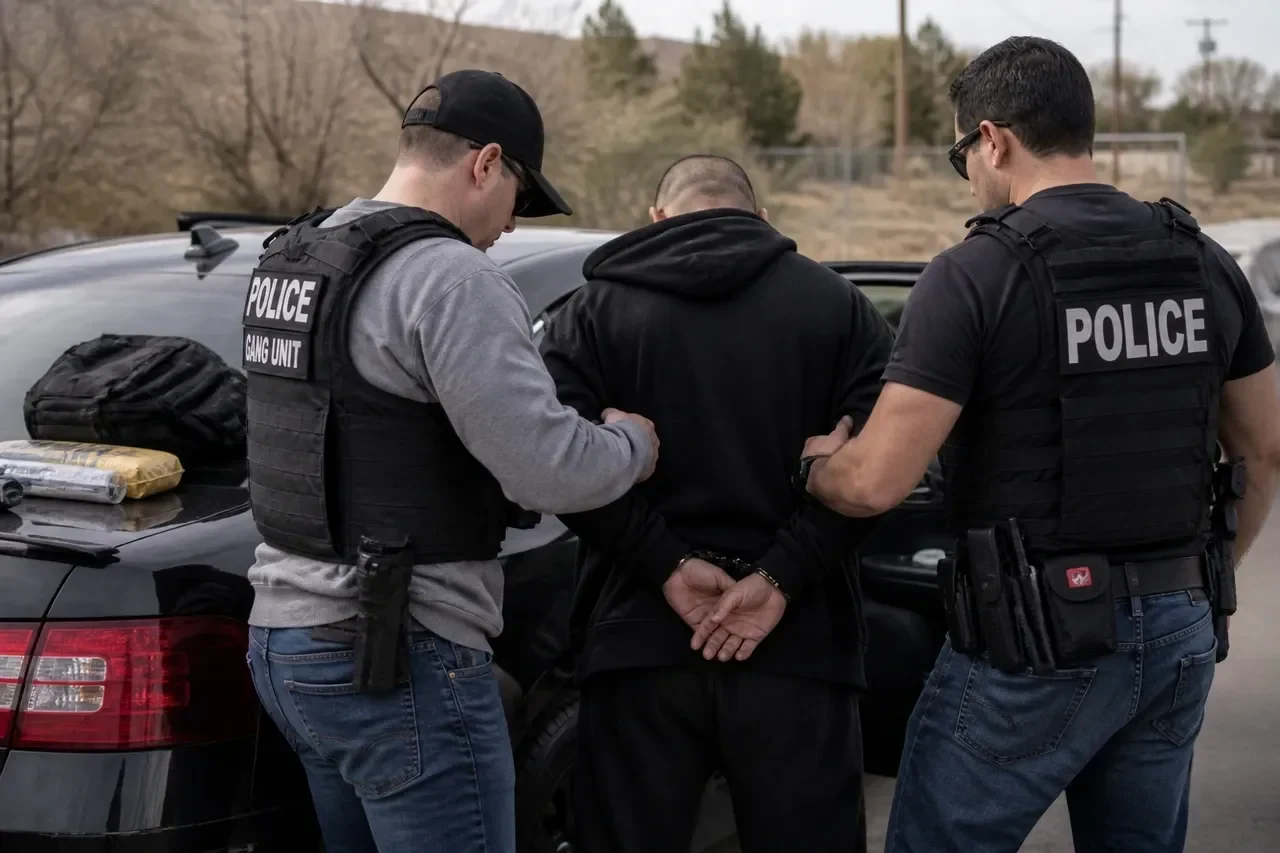
A drug arrest in Texas can affect you in far more ways than just the criminal case itself. Even before a conviction, an arrest can create stress, employment concerns, immigration risks, licensing issues, and a public record that may follow you unless it is later sealed or expunged. The exact consequences depend on the substance, the amount, whether police allege possession or delivery, your criminal history, and how the case is resolved.
This article provides a general overview of common consequences under Texas law. It is not legal advice for any specific case.
A Drug Arrest Can Lead to Misdemeanor or Felony Charges
Texas drug offenses are primarily governed by the Texas Controlled Substances Act. The law divides controlled substances into penalty groups, and the charge level often depends on the type and weight of the substance.
For example, possession of a substance in Penalty Group 1 or 1-B is prosecuted under Tex. Health & Safety Code § 481.115. Penalty Group 1 commonly includes drugs such as cocaine, heroin, methamphetamine, and certain opioids. Even a small amount can result in a felony charge. Generally, possession of less than one gram is a state jail felony, while larger amounts can increase the charge to third-degree, second-degree, first-degree, or enhanced first-degree felony levels.
Marijuana is treated separately under Tex. Health & Safety Code § 481.121. Possession of a small amount of marijuana may be charged as a misdemeanor, but larger quantities can become felony offenses. Importantly, Texas law still criminalizes marijuana possession in many circumstances, even though other states may treat marijuana differently.
If the allegation is not simply possession but manufacture, delivery, or possession with intent to deliver, the stakes are usually higher. For Penalty Group 1 substances, those offenses are addressed by Tex. Health & Safety Code § 481.112. Delivery-related allegations can dramatically increase punishment exposure, particularly where the alleged amount is high or the State claims there was intent to distribute.
“Possession” Does Not Always Mean the Drugs Were in Your Pocket
Many clients assume they can only be charged if drugs were found directly on their person. In Texas, that is not necessarily true. Police may make an arrest based on drugs found in a vehicle, home, bag, hotel room, or shared space if they believe there is a connection between the person and the substance.
That said, the State must still prove more than mere presence near drugs. In many cases, the defense may turn on whether prosecutors can prove knowledge, control, and a sufficient link between the accused person and the substance. Common issues include:
- Who owned or controlled the vehicle or location;
- Whether the drugs were in plain view;
- Whether multiple people had access to the area;
- Whether the accused made any statements;
- Whether there was paraphernalia, cash, scales, packaging, or other evidence;
- Whether the search itself was lawful.
These facts matter because an arrest is not the same as proof beyond a reasonable doubt.
Jail, Fines, Probation, and Court Costs Are Possible
The immediate concern after a drug arrest is often release from jail. Depending on the charge, a person may be eligible for a bond, personal bond, or other release conditions. Bond conditions may include drug testing, travel restrictions, no new offenses, and requirements to appear in court.
If the case results in a conviction, possible penalties may include:
- Jail or prison time;
- State jail confinement for state jail felonies;
- Fines;
- Community supervision, commonly called probation;
- Drug treatment or counseling;
- Random drug testing;
- Community service;
- Court costs and fees.
Some first-time or lower-level cases may be eligible for diversion, deferred adjudication, or negotiated outcomes that avoid a final conviction. But eligibility varies by county, charge, criminal history, and prosecutorial policy.
A Drug Arrest Can Affect Your Driver’s License
Texas law can also affect driving privileges after certain drug-related convictions. Under Tex. Transp. Code § 521.372, Texas provides for license suspension or denial in connection with certain drug offenses. The practical effect is that a person facing a drug case should consider not only jail and fines, but also the possible impact on the ability to drive to work, school, court, or family obligations.
License issues are especially important for clients whose employment requires driving or who live in areas without reliable public transportation.
Employment and Professional Licensing Consequences Can Be Serious
A drug arrest can appear on background checks, even if the case has not resulted in a conviction. Employers may ask about pending charges, and some industries are especially sensitive to drug allegations, including:
- Health care;
- Education;
- Childcare;
- Law enforcement and security;
- Transportation;
- Government employment;
- Jobs requiring professional licenses;
- Jobs requiring commercial driving;
- Positions involving controlled substances, medications, or vulnerable populations.
For licensed professionals, a drug arrest may trigger reporting obligations or disciplinary review. Nurses, doctors, pharmacists, teachers, lawyers, pilots, commercial drivers, and other licensed professionals should seek advice early because the criminal case and licensing consequences may need to be handled together.
Immigration Consequences Can Be Severe
For non-citizens, drug charges can carry consequences that are more serious than the criminal sentence itself. A drug conviction may affect visa status, lawful permanent residency, naturalization, admissibility, or removability. Even deferred adjudication or a plea that seems favorable under Texas criminal law may still create immigration problems under federal immigration law.
Non-citizens should not plead guilty, no contest, or accept deferred adjudication in a drug case without first obtaining immigration-informed criminal defense advice.
Housing, Education, and Financial Aid May Be Affected
Drug arrests and convictions can affect other areas of life, including:
- Apartment applications and lease renewals;
- Public housing eligibility;
- College or university discipline;
- Scholarships;
- Financial aid;
- Military enlistment or service;
- Security clearances;
- Child custody disputes.
These consequences are often called “collateral consequences” because they occur outside the criminal sentence. They can still be life-changing.
Search and Seizure Issues Often Matter in Drug Cases
Many Texas drug cases depend on how police found the substance. Common defense questions include:
- Did officers have reasonable suspicion to stop the person or vehicle?
- Was the traffic stop prolonged unlawfully?
- Did police have probable cause to search?
- Was consent to search actually voluntary?
- Was a warrant required?
- Was the warrant valid?
- Were statements obtained in violation of constitutional rights?
- Was the substance tested properly?
- Can the State prove chain of custody?
If evidence was obtained unlawfully, the defense may seek to suppress it. A successful suppression issue can significantly weaken or sometimes end the prosecution’s case.
Drug Cases May Involve Lab Testing and Weight Disputes
The alleged substance and its weight are central to many Texas drug charges. The difference between one weight category and another can change the punishment range. In some cases, the defense may need to examine:
- Whether the substance was actually tested by a qualified lab;
- Whether the testing method was reliable;
- Whether the entire mixture was weighed;
- Whether packaging was included improperly;
- Whether the substance falls within the charged penalty group;
- Whether the State can prove the amount alleged.
These issues are particularly important in felony controlled-substance cases.
Expunction and Nondisclosure May Be Possible, But Not Automatic
Many people want to know whether a drug arrest can be removed from their record. The answer depends on how the case ends.
An expunction may be available in limited circumstances, such as certain dismissals, acquittals, pardons, or cases where no charge was filed and statutory waiting periods are satisfied. Texas courts treat expunction as a statutory remedy, not an automatic right.
A nondisclosure order is different. It generally seals criminal history information from public view but does not destroy the record and may remain visible to law enforcement and certain agencies. Texas nondisclosure procedures include provisions such as Tex. Gov’t Code § 411.072 for certain nonviolent misdemeanors after deferred adjudication, and Tex. Gov’t Code § 411.0725 for deferred adjudication involving felonies and certain misdemeanors.
The key point is this: dismissal does not always mean the record disappears, and deferred adjudication does not always mean the record is automatically sealed. Record-clearing options should be discussed before resolving the criminal case whenever possible.
Early Decisions Can Shape the Entire Case
What happens in the first days after a drug arrest can matter. Prospective clients should avoid assuming that a case is hopeless simply because drugs were found, and they should avoid assuming that a “first offense” will automatically disappear.
Important early steps may include:
- Preserving video, texts, location data, receipts, or witness information;
- Avoiding statements to police without counsel;
- Understanding bond conditions;
- Appearing at all court settings;
- Avoiding new arrests;
- Requesting and reviewing police reports, body camera footage, lab reports, and search materials;
- Considering immigration, licensing, employment, and record-clearing consequences before entering any plea.
Contact Derek Israel Law
Conclusion
A drug arrest in Texas can carry criminal penalties, driver’s license consequences, employment problems, immigration risks, professional licensing issues, and long-term record consequences. The seriousness of the case depends on the substance, amount, alleged conduct, criminal history, and available defenses.
Because the consequences can extend far beyond the courtroom, anyone arrested for a drug offense in Texas should speak with a qualified criminal defense attorney as early as possible. Early legal guidance can help protect rights, evaluate defenses, and pursue the best available path toward minimizing both criminal and collateral consequences.